
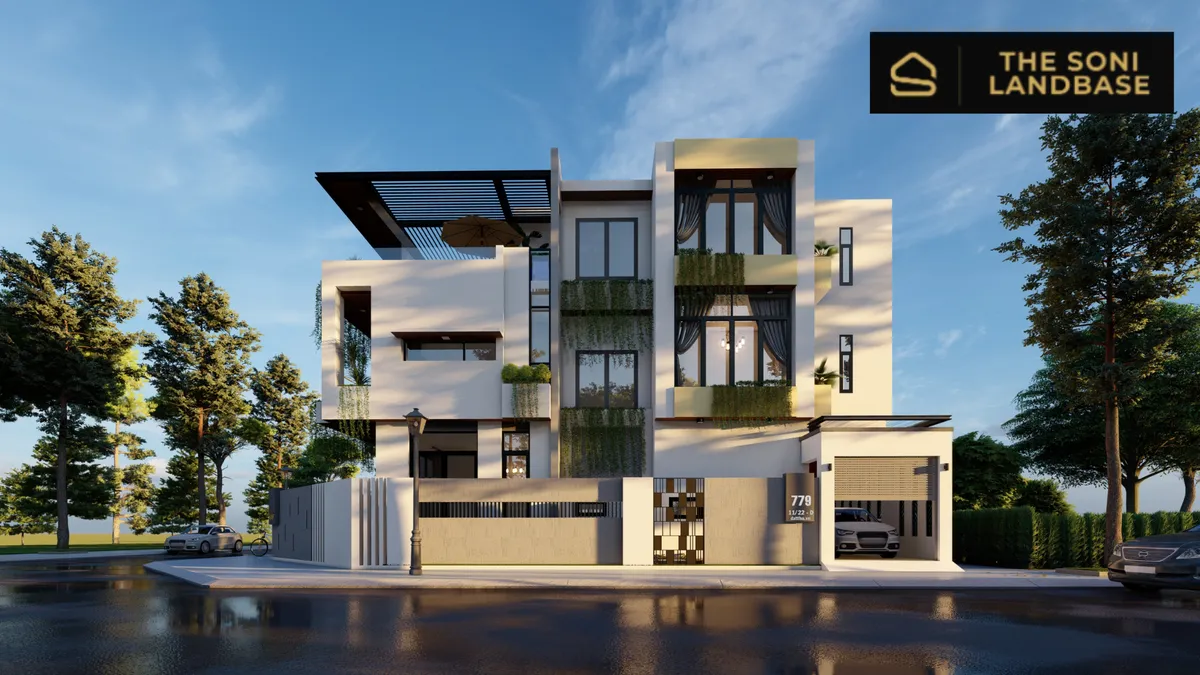
Choosing a home in Gurgaon is rarely just about budget. It is about how you want to live, how much space you need, how much maintenance you are willing to handle, and what kind of neighbourhood energy you want around you. Gurgaon offers three broad categories of residential real estate: villas, kothis, and apartments. Each comes with its own lifestyle, cost structure, and long term value proposition.
If you have been house hunting in Gurgaon, you have probably noticed that these three terms get used loosely, sometimes interchangeably, even though they mean very different things on the ground. This guide breaks down each property type in detail, compares them side by side, and helps you figure out which one actually fits the way you live.
Understanding the Three Property Types
Before comparing them, it helps to know exactly what each term means in the Gurgaon real estate context, since builders and brokers do not always use them consistently.
What Is a Villa in Gurgaon
A villa is a standalone or semi attached low rise residential unit, usually built within a gated township or private community. Villas in Gurgaon are commonly found in developments along Golf Course Road, Golf Course Extension Road, Sohna Road, and in premium gated enclaves. They typically come with a private garden, a garage, and sometimes a private pool or terrace, along with shared access to community amenities such as clubhouses, swimming pools, jogging tracks, and 24 hour security.
Villas are almost always part of a planned development with a homeowners association or a builder run maintenance agency handling upkeep of common areas.
What Is a Kothi in Gurgaon
A kothi is a term rooted in North Indian residential culture. It generally refers to an independent house built on a plot of land, often within older or more established sectors of Gurgaon such as Sector 14, Sector 15, DLF Phase 1 to 5, or South City. Unlike villas, kothis are usually not part of a single builder led gated township. Instead, they sit on individually owned plots, often within a colony that has its own resident welfare association, but not necessarily uniform architecture or centrally managed amenities.
A kothi gives the owner full control over design, construction, and renovation, since the land and structure belong entirely to the family. Many kothis in Gurgaon have been built or rebuilt over decades, with additions like extra floors, home offices, or separate portions for extended family.
What Is an Apartment in Gurgaon
An apartment is a unit within a multi storey residential building, part of a larger complex that includes many similar units stacked across several floors. Gurgaon has no shortage of apartment options, ranging from affordable housing projects near Dwarka Expressway to ultra luxury high rises on Golf Course Road and Golf Course Extension Road.
Apartments come with shared amenities, a managing body such as an RWA or a facility management company, and a fixed footprint that cannot usually be expanded. Maintenance of the building structure, lifts, common areas, and security is handled collectively.
Villas vs Kothis vs Apartments: Quick Comparison Chart
| Factor | Villa | Kothi | Apartment |
| Ownership structure | Builder developed gated community | Independent plot, individually owned | Multi storey building, unit ownership |
| Typical location in Gurgaon | Golf Course Road, Golf Course Extension, Sohna Road | DLF Phases, Sector 14/15, South City | Dwarka Expressway, NH-48, Golf Course Road, New Gurgaon sectors |
| Privacy level | High | Very high | Moderate |
| Outdoor or garden space | Private garden or terrace, community green areas | Private terrace or courtyard, sometimes a small garden | Balcony only, shared green spaces |
| Customisation freedom | Limited to interiors, some structural changes allowed | Full freedom, including future floors | Interiors only, no structural changes |
| Maintenance responsibility | Shared for common areas, private for unit | Fully owner managed | Shared, handled by RWA or facility manager |
| Security | Gated, centralised, 24x7 | Depends on colony RWA | Gated, centralised, 24x7 |
| Upfront cost | High | Variable, land cost dependent | Moderate to high depending on project |
| Resale liquidity | Moderate, niche buyer pool | Depends on location and condition | High, broadest buyer pool |
| Best suited for | Families wanting space with community living | Multi generational families, those wanting full ownership control | Working professionals, nuclear families, investors |
This chart is a starting point. The right choice still depends on your family size, your budget flexibility, and how long you plan to stay in the property.
Villas: Pros and Cons
Pros of Living in a Villa
Villas offer a rare combination in a city like Gurgaon: the space and privacy of an independent house, along with the security and amenities of a managed township. You get a private garden or courtyard, dedicated parking, and often a layout that spans two or three floors, giving each family member room to breathe.
Because villas sit within gated developments, residents also get access to clubhouses, swimming pools, gyms, and landscaped common areas without having to build or maintain these facilities themselves. Security tends to be tighter and more consistent than in older independent colonies, since access is controlled at the township level.
Villas also tend to hold strong appeal for buyers who want a premium lifestyle statement. Locations like Golf Course Road and Golf Course Extension Road have become synonymous with high end villa communities, and that address itself carries weight.
Cons of Living in a Villa
The biggest drawback is cost. Villas are usually the most expensive property type per square foot in Gurgaon, both in terms of purchase price and ongoing maintenance charges, since residents pay for the upkeep of extensive common amenities whether they use them or not.
Villas also come with less design freedom than a kothi. Most gated developments enforce architectural guidelines, meaning you cannot freely alter the exterior or add extra floors beyond what the builder has approved.
Finally, the buyer pool for villas is narrower. Resale can take longer compared to apartments, since fewer buyers are shopping in this price bracket at any given time.
Kothis: Pros and Cons
Pros of Living in a Kothi
A kothi offers the highest degree of ownership control among the three options. Since you own the land outright, you can design the house exactly as you want, add floors as your family grows, rent out a portion for additional income, or eventually redevelop the plot entirely.
Kothis are well suited to multi generational households. It is common to see kothis in older Gurgaon sectors with one floor for parents, one for a married son's family, and a ground floor portion rented out or used as a home office. This flexibility is hard to replicate in a villa or apartment.
Older kothi colonies like DLF Phase 1, Sector 14, and South City also benefit from mature infrastructure, established markets, good school access, and central location relative to newer developments further out on the expressways.
Cons of Living in a Kothi
The flip side of full ownership control is full ownership responsibility. There is no builder or facility management company handling repairs, security, or common area upkeep. Everything from plumbing to painting to boundary wall repairs falls on the owner.
Security also varies significantly by colony. Some RWAs in established sectors run tight, well funded security operations, while others rely on informal arrangements that are far less consistent than a gated villa township.
Kothis can also involve more complex due diligence during purchase, since land title, conversion status, and construction approvals need careful verification, particularly for older properties that may have been extended or modified over the years without updated paperwork.
Apartments: Pros and Cons
Pros of Living in an Apartment
Apartments are the most accessible entry point into Gurgaon real estate, both financially and in terms of ease of purchase. Builders offer a wide range of configurations, from compact 2 BHKs to expansive 4 BHK penthouses, across almost every budget segment.
Maintenance is largely hands off for the owner. A facility management team or RWA handles building upkeep, security, landscaping, and common amenities, which suits busy professionals who do not want to spend weekends managing repairs.
Apartments also offer the strongest resale liquidity of the three options. Because the buyer pool is much larger, spanning first time buyers, upgraders, and investors, apartments generally sell faster and command more predictable pricing based on comparable units in the same tower.
Cons of Living in an Apartment
Privacy and space are the main trade offs. You share walls, floors, and often views with neighbouring units, and outdoor space is usually limited to a balcony rather than a private garden.
Customisation is restricted to interiors. You cannot alter the building structure, and any changes to layout typically require approval and must work within the constraints of the existing floor plan.
Ongoing maintenance charges, while covering more services, are recurring and can add up over the years, particularly in premium high rise projects with extensive amenities.
Which One Fits Your Lifestyle
There is no universally correct answer here. The right property type depends on how you actually live, not just on budget.
If you are a large or multi generational family that values independence, wants room to expand over time, and does not mind managing the property yourself, a kothi is likely the better fit. The ownership flexibility and central location of older Gurgaon sectors are hard to match elsewhere.
If you want the feel of an independent house without the operational burden, a villa in a gated community strikes a good balance. You get private space, a garden, and a premium address, while the township handles security and common area maintenance.
If you are a working professional, a smaller nuclear family, or someone prioritising convenience and resale flexibility, an apartment usually makes the most practical sense. Lower entry cost, hands off maintenance, and strong liquidity make apartments a reliable choice, especially for first time buyers or those relocating to Gurgaon for work.
It also helps to think about your five to ten year horizon. Families expecting to grow, or expecting parents to move in, often outgrow apartments faster than they expect. On the other hand, professionals who may relocate for career reasons often prefer the flexibility of a more liquid apartment purchase over a kothi or villa that could take longer to sell.
Factors Beyond Property Type
While the villa versus kothi versus apartment decision is central, a few other factors should shape your final choice regardless of which category you lean toward.
- Proximity to workplace and schools. Gurgaon's traffic patterns mean that a 10 kilometre difference in location can translate into a significant daily time cost. Map your commute before finalising any property type.
- Builder and colony reputation. For villas and apartments, research the builder's track record on construction quality and timely delivery. For kothis, check the reputation and financial health of the local RWA.
- Legal due diligence. Title verification, conversion certificates, occupancy certificates, and RERA registration status (where applicable) should be checked carefully before making any commitment.
- Future development plans in the area. Upcoming metro connectivity, expressway expansions, or commercial projects nearby can significantly affect both lifestyle convenience and long term property value.
- Total cost of ownership. Look beyond the purchase price to include maintenance charges, property tax, and any renovation or upkeep costs you are likely to incur over the years.
Why Local Expertise Matters in This Decision
Gurgaon's real estate market is not uniform. A villa community on Golf Course Road operates under very different dynamics than a kothi colony in Sector 14 or an apartment tower near Dwarka Expressway. Pricing trends, appreciation potential, rental demand, and even the quality of civic infrastructure can vary sharply between these micro markets, sometimes within just a few kilometres of each other.
This is where working with a real estate partner who genuinely understands Gurgaon's neighbourhoods, not just its listings, makes a difference. A knowledgeable local agency can walk you through actual resale trends in a specific sector, flag potential red flags in a kothi's paperwork, or explain why one villa township commands a premium over a similar looking one nearby.
Final Thoughts
Villas, kothis, and apartments each serve a different kind of buyer. Villas offer a managed premium lifestyle with private outdoor space. Kothis offer full ownership control and multi generational flexibility, particularly valuable in Gurgaon's established sectors. Apartments offer affordability, convenience, and the strongest resale liquidity.
The best decision comes from matching the property type to your actual daily life, not just to your budget or to what looks impressive on paper. Think about how much space you need, how much maintenance you are willing to take on, how long you plan to stay, and how important resale flexibility is to you.
If you are still weighing your options and want a clearer picture of which property type and which Gurgaon micro market genuinely fits your needs, it helps to talk to someone who tracks these neighbourhoods closely. The team at The Soni Landbase works across villas, kothis, and apartments throughout Gurgaon and can walk you through live listings, pricing trends, and due diligence specific to your shortlist.
Speak to Our Expert to get a personalised comparison based on your budget, family size, and preferred location before you make your next move.